#DevolveWealth
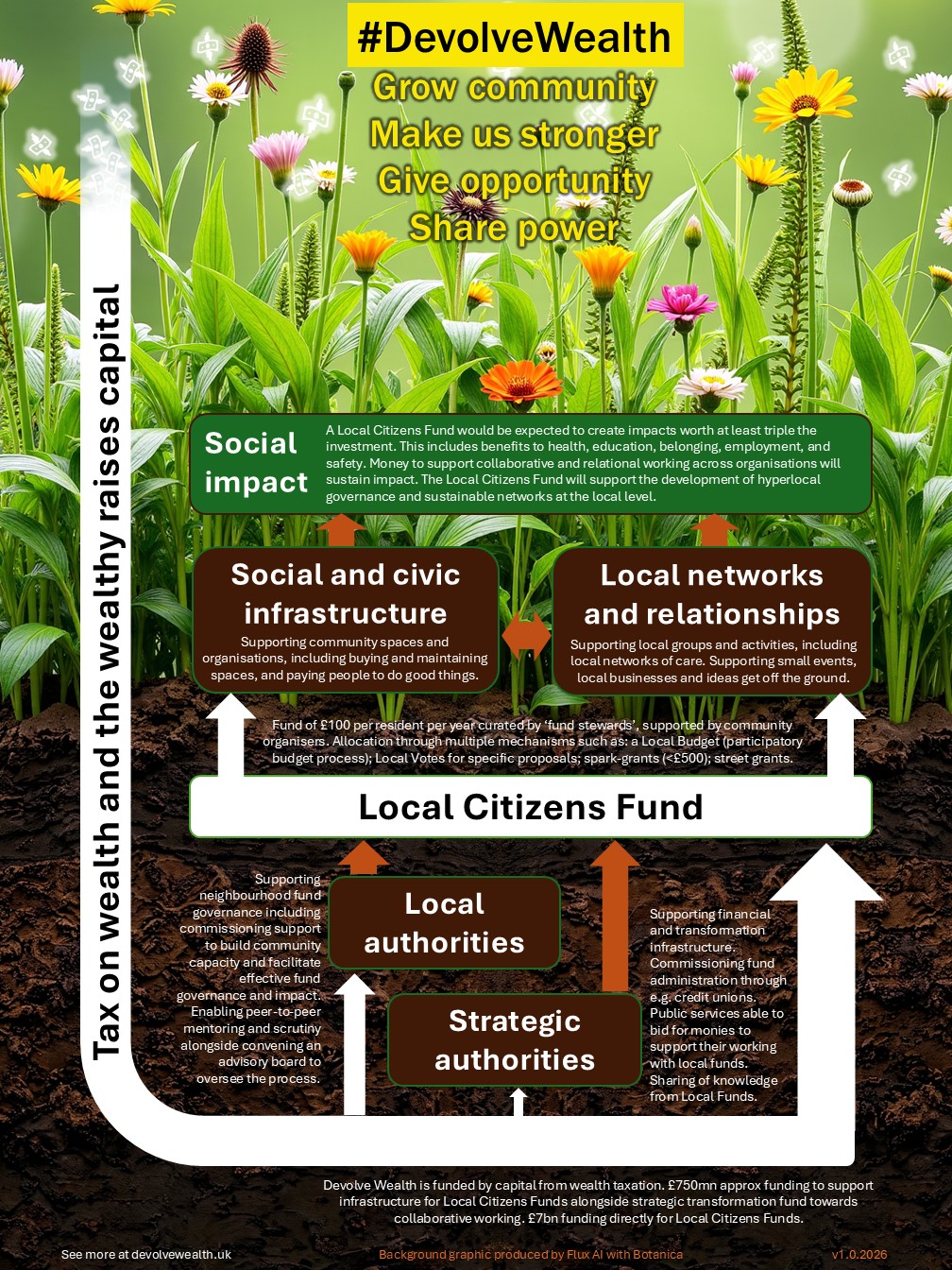
A Local Citizens Fund for every place and owned by every place. It would:
£8 Billion
Taxes on wealth and the wealthy raise £8 billion per year. This would help redistribute a growing imbalance of wealth and opportunity that harms everyone.
£100 pp
The Local Citizen Funds would be £100 for every person in your area very year, stewarded by local people. Money would be allocated by participatory budgets, votes, and small grants.
x3
Giving money to communities in this way produces over three-times the benefit in reduced costs for other public services, apart from all the other goods that can follow.
How #DevolveWealth works
Taxes on wealth and the wealthy would go to Local Citizens Funds. Relatively modest levels of tax could raise £8billion per year, with the preferred option being a minimum tax on the super-rich. This would makes a clear link between wealth, fairness, responsibility, and the social value of sharing good fortune with communities.
Local Citizen Funds would be held by an independent local body, like a Credit Union. There would be several ways local people would decide how to spend their local fund. The decisions on the fund would be at the neighbourhood or village scale.
Up to 10% of the wealth gathered through taxation would be used to support communities make best use of the funds, including supporting community development and helping public services work with the local fund areas.
A neighbourhood of 5,000 people would have a fund of £500,000 to spend each year, with any monies unspent adding to their fund. For bigger projects or to have more impact on a goal, neighbourhoods would need to work together or find further funding.
Giving money to local people to spend on good things has been shown to be effective. It helps prevent demand on public services in the long term. It shares out wealth, giving power back to people. It will make the UK a happier, more confident, stronger, and fairer place to be.

Grow community
#1 Helping buy community buildings, providing places for people to meet, celebrate, make and play. This is key to building community and an increasing priority. There are many examples, including Coalville CAN, Onion Collective's East Quay, and Rastrick Community Centre.
#2 Enabling neighbourhood care supporting local networks of people caring for each other. For example: Neighbourhood Networks and Connecting Care.
#3 Supporting community activity, through small grants, as with the small-sparks grant programme. The funding should support people to do good things, not replace them.
Make us stronger
#1 Increasing resilience through support for local projects that help in hard times. For example, the role of Big Local in the cost of living crisis and the LS14 trust.
#2 Developing governance structures to administer the fund, stimulating stronger hyperlocal governance. This will benefit emergency response, such as by community orientated councils in the Covid-19 pandemic.
#3 Connecting people so that there are strong networks and groups on the ground ready to respond to emergencies. This could build upon the existing impact of Community Foundations.

Support opportunity
#1 Supporting local economies including supporting sustainable enterprise, increasing financial literacy, and laying the groundwork for economic success.
#2 Growing leadership skills through leading local projects, being involved in growing anchor organisations and local governance structures. Where leadership skills are developed across all those active, this will support successful communities.
#3 Connecting across and out to conversations with other localities, local and strategic authorities. This could include local and regional networks of organisations and localities to share ideas and resources.
Share power
#1 Sharing wealth - reducing the gap between ordinary people and the ultra-rich helps our society be more cohesive. The idea is supported by most people, including millionaires. The current proposal would make a fairer tax on the super-rich with this wealth supporting communities.
#2 Sharing innovation - the power to back innovation rests with wealth. By devolving wealth, social innovation could be properly supported across the UK, helping address the deepest challenges we face.
#3 Sharing power - giving communities a say over a pot of money, like the Local Citizen Fund, is at the heart of democracy. It can be challenging. This means supporting what is already strong and the people doing good.